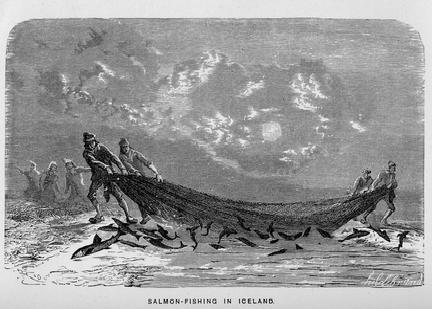
In 1845, Ida Pfeiffer made a trip to Iceland by herself.
There was outrage in some places at the idea of a woman traveling alone in such an isolated, difficult place. Some of that outrage was simply at the idea of a woman traveling alone. Since early childhood she had wanted to travel and with her children grown, she decided to travel, to keep a diary and, if possible, to have her diary published. She accomplished all her goals.
Her books, written in German, were widely translated. She sugar coats nothing in her travels. She talks about both kindness and meanness, both honesty and dishonesty, cleanliness and dirtiness. She describes the rigors of sea-sickness and long days in the saddle without excusing herself in any way.
Her book, now reprinted in a modern version, A Visit to Iceland and the Scandinavian North, can be ordered over the internet and, although her portrait of Iceland and Icelanders thirty years before the emigration to North America began isn
